Acoustic fabrics
Better acoustics through textile design
Our acoustic fabrics combine textile design with tested sound absorption to help reduce reverberation and improve acoustic comfort in interior spaces. Curtains introduce textile surfaces capable of absorbing part of the sound energy within a room, contributing to more comfortable acoustic environments.
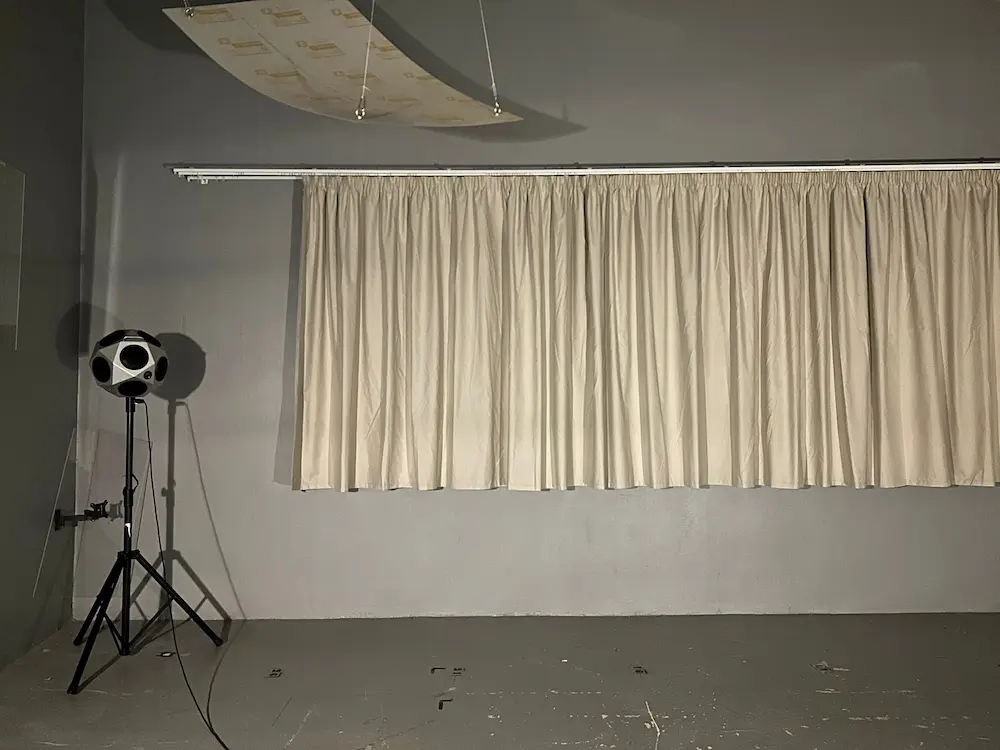
Tested acoustic performance
Sound absorption is tested in a reverberation chamber according to UNE-EN ISO 354 and classified according to UNE-EN ISO 11654 and ASTM C423. These internationally recognised standards provide objective criteria for evaluating and comparing the acoustic performance of textile solutions.
How acoustic curtains work
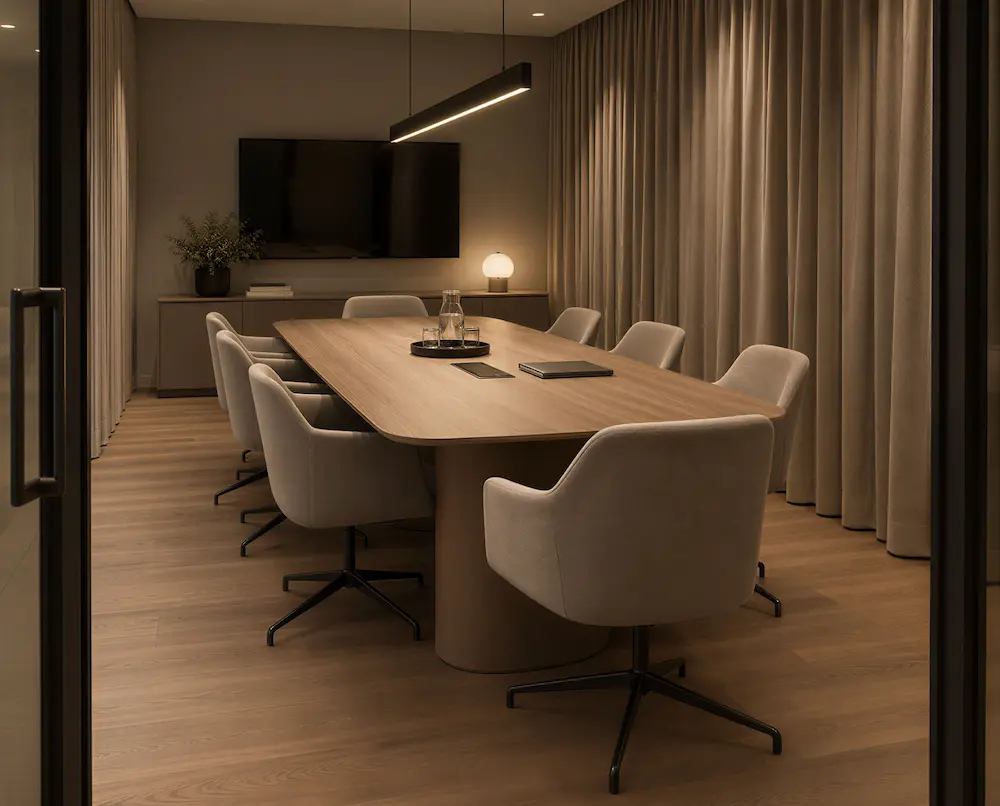
When sound reaches a textile surface, part of its energy can be absorbed rather than reflected back into the room. Fabric construction, weight, thickness and installation configuration can influence this behaviour. Curtains can therefore contribute to reducing excessive reverberation, particularly in interiors containing large areas of glass and other hard reflective surfaces.
Understanding acoustic performance
Acoustic performance can be expressed through internationally recognised indicators such as the weighted sound absorption coefficient (αw), the European Acoustic Class and the American Noise Reduction Coefficient (NRC). Higher sound absorption values indicate a greater capacity of the tested configuration to absorb sound energy.
Acoustic performance for contract interiors
Acoustic comfort is increasingly relevant in hotels, restaurants, offices, meeting rooms, auditoriums, educational spaces and public buildings. Our acoustic range includes different textile solutions, from decorative curtains to dimout and blackout fabrics, combining acoustic functionality with design and other technical properties.
The importance of installation
The final acoustic performance depends not only on the fabric itself but also on how the curtain is installed. Factors such as the amount of fabric, folds and distance between the curtain and the wall or window can influence sound absorption. For this reason, acoustic results should always be considered in relation to the tested configuration.
VIEW ACOUSTIC FABRICS