

THERMAL CURTAINS: what is GTOT and why is it important?
22/10/2026

Thermal curtains and sun protection for indoor spaces
Thermal curtains can help improve indoor comfort by controlling the amount of solar energy entering through windows. In hotels, offices, homes and other contract spaces, choosing fabrics with solar protection properties helps to limit overheating caused by solar radiation, particularly during the summer months. To technically assess this property, the gtot is used; this is an indicator that measures the total solar energy transmittance of the combination of the glazing and the curtain.
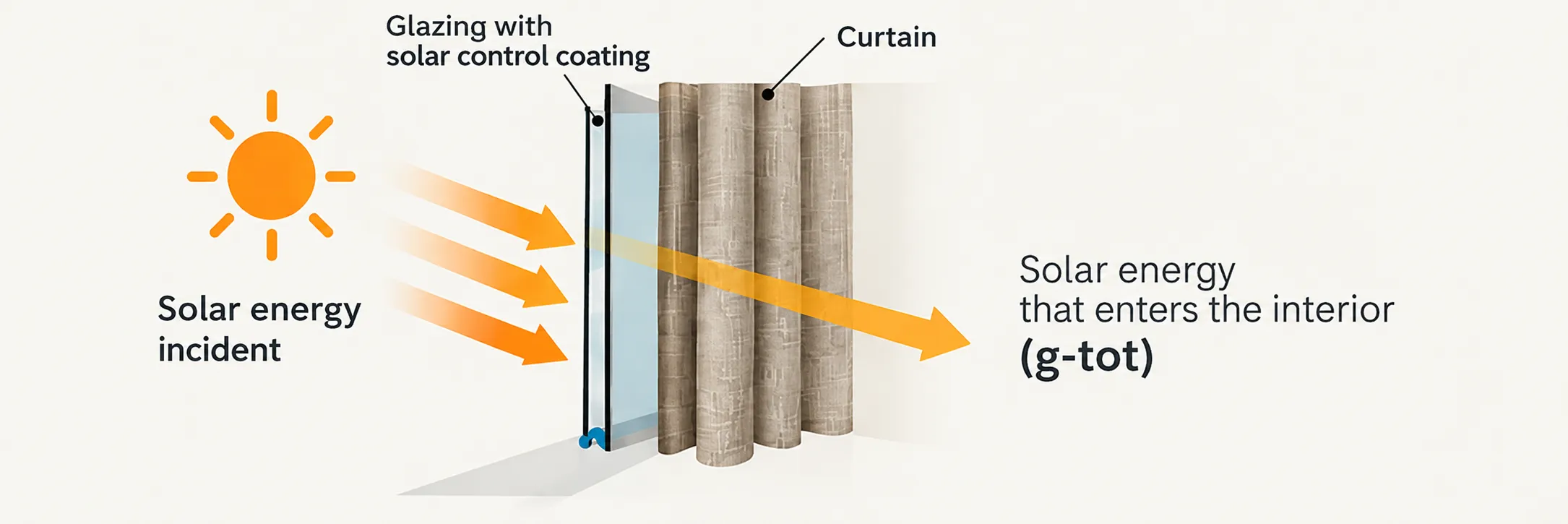
What is gtot and how does it work? How to interpret gtot values: the closer to 0, the better the solar protection
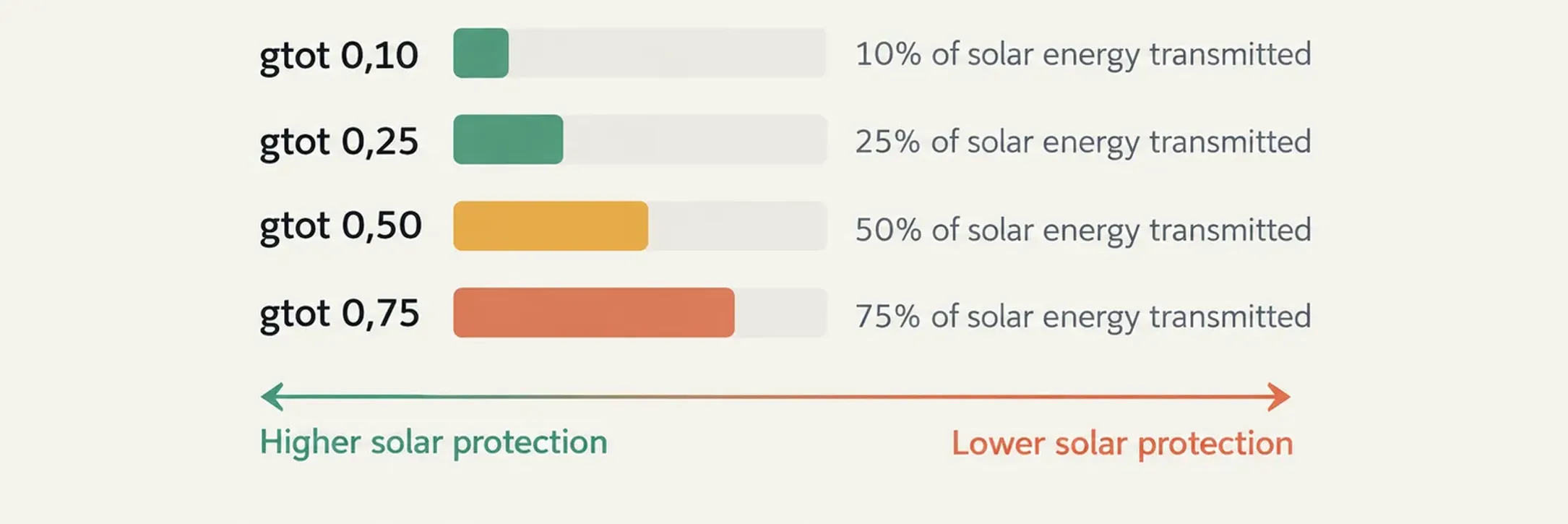
Gtot (total solar energy transmittance) expresses the proportion of incident solar energy that enters an interior space through the combination of the glass and a solar protection device, such as a curtain. Its value ranges from 0 to 1. The closer the result is to 0, the less solar energy enters and, therefore, the greater the solar protection provided by the system under assessment. It is important to note that GTOT does not depend solely on the fabric. The characteristics of the glazing also play a part, which is why the same curtain may yield different results depending on the type of glass used.
Interpreting GTOT is straightforward: a low value indicates less solar energy entering the interior. For example, a gtot of 0.10 means that approximately 10 per cent of the incident solar energy passes through the combination of glass and curtain, whilst a gtot of 0.50 indicates that approximately 50 per cent enters.
Therefore, under equivalent conditions, a combination with gtot = 0.25 offers greater solar protection than one with gtot = 0.50.
Standards for assessing the solar protection of fabrics
At Aznar Textil, we have carried out solar protection tests on various fabrics through the independent laboratory AITEX, using measurements of their optical properties and standardised calculations. The two reference technical standards are:
- UNE EN 410 — Glass for building purposes. Determination of the luminous and solar characteristics of glazing. This standard enables the characterisation of the luminous and solar properties of glass used in building construction.
- UNE-EN ISO 52022-1:2017 — Energy performance of buildings. Thermal, solar and daylight properties of building components and their elements. Part 1: Simplified method for calculating the solar and daylight characteristics of solar shading devices combined with glazing. This standard establishes a simplified procedure for calculating the solar characteristics of the assembly comprising the glazing and the solar shading device.
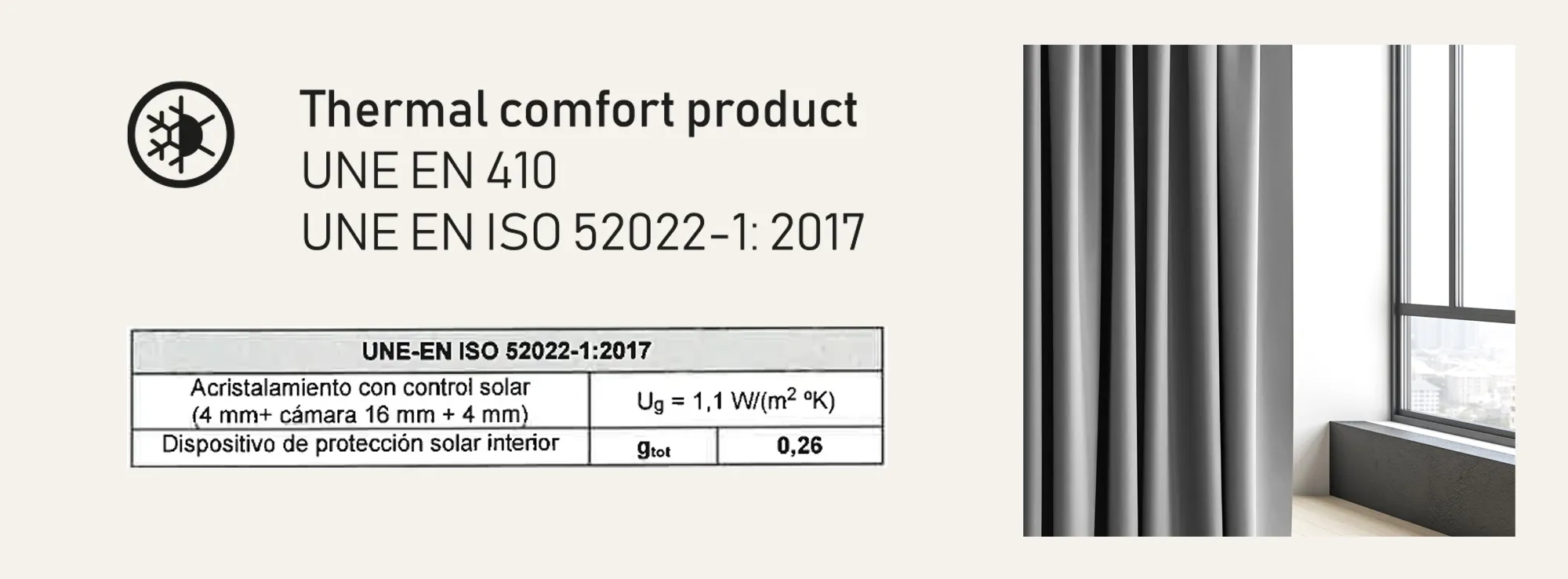
Example of an AITEX test: What does a gtot of 0.26 mean?
It means that approximately 26 per cent of the incident solar energy enters the interior space through the glazing and solar shading assembly, under the conditions assessed. Therefore, the assembly limits the entry of solar energy to 26 per cent of the incident energy, which helps to reduce solar gains compared with a solution having a higher gtot value.
This result corresponds to a specific configuration. Values may vary depending on the fabric, the glazing and the test conditions.
Conclusion:
Assessing the gtot enables the selection of curtains and decorative fabrics, taking into account not only their design but also their technical performance in relation to solar radiation.
Sun protection fabrics for contract projects
At Aznar Textil, we combine our expertise in textile manufacturing with tests carried out by independent laboratories to provide useful technical information to architects, interior designers and professionals in the contract sector.
Discover our fabrics with sun protection properties and consult our team regarding the technical results available for each product.