

ACOUSTIC CURTAINS: What is sound absorption and how does it work?
27/10/2026
DECORATIVE FABRICS WITH SOUND ABSORPTION
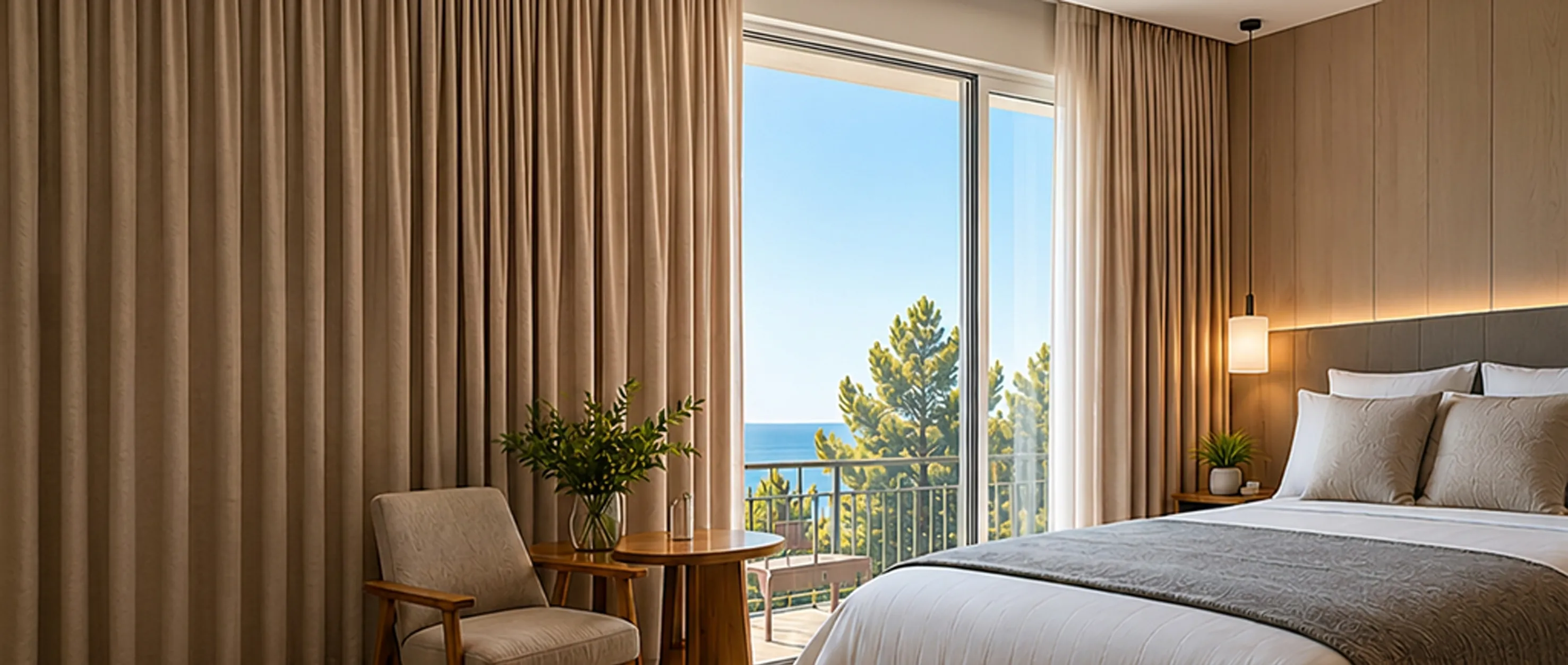
Acoustic comfort is a key factor in the design of hotels, restaurants, offices, homes and other contract spaces. Acoustic curtains are textile solutions that can help absorb some of the sound energy within a room, reducing reverberation and improving comfort. At Aznar Textil, we design and manufacture decorative fabrics with technical properties that combine aesthetics, functionality and well-being.
HOW SOUND ABSORPTION IS MEASURED
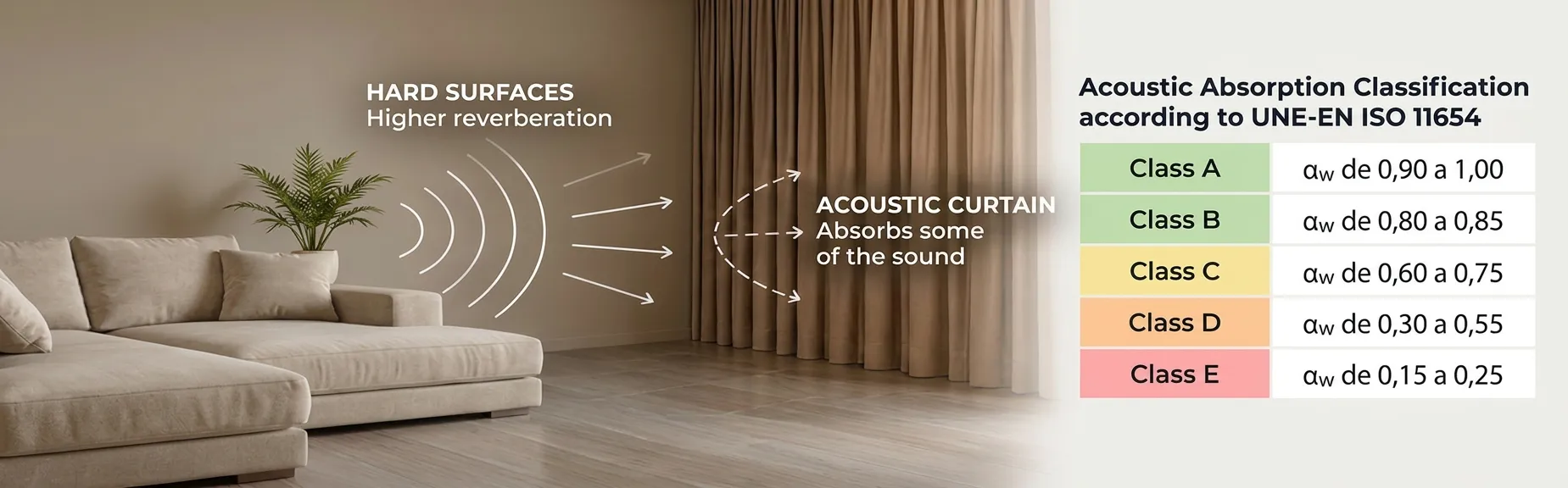
When sound waves strike a surface, part of their energy is reflected and part may be absorbed. Fabrics with sound-absorbing properties help to reduce sound reflections within a room, thereby helping to control reverberation.
This performance is assessed using the weighted sound absorption coefficient (aw), calculated in accordance with the UNE-EN ISO 11654 standard. The higher the value (aw), the greater the sound absorption capacity.
This performance is assessed using the weighted sound absorption coefficient (aw), calculated in accordance with the UNE-EN ISO 11654 standard. The higher the value (aw), the greater the sound absorption capacity.
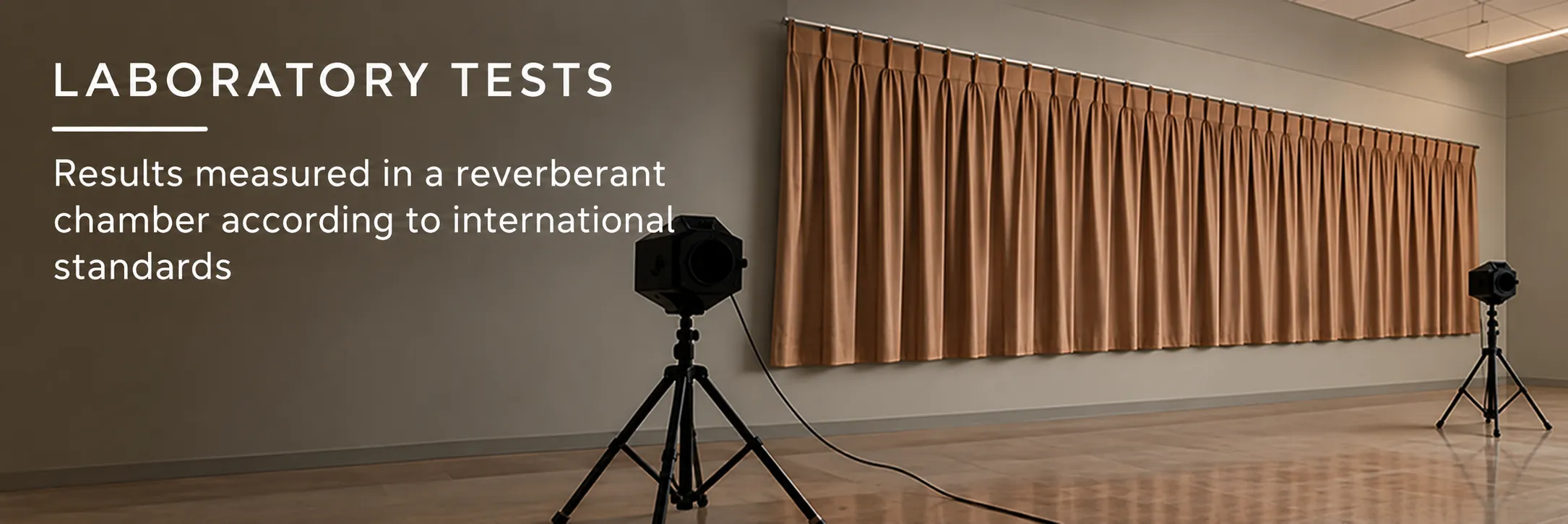
UNE-EN ISO 354:2004 — Measurement procedure in a reverberation chamber.
UNE-EN ISO 11654:1998 — Calculation of the weighted sound absorption coefficient (aw) and acoustic classification.
ASTM C423-09a — American test method (includes, amongst others, the NRC).
Aznar Textil has participated in sound absorption tests on various curtain configurations, carried out in a reverberation chamber by specialists from the Polytechnic University of Valencia and analysed by AITEX. Eight curtain configurations were analysed, all made with 100% gathering and a 15 cm gap from the wall.
TEST RESULTS
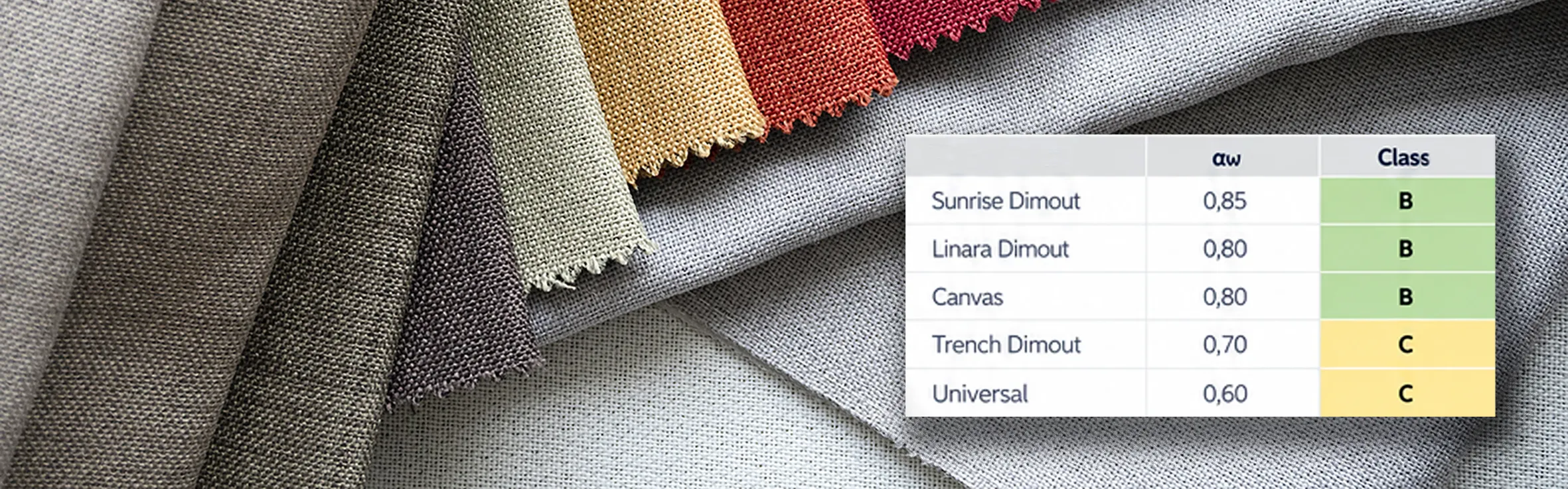
The sound absorption tests carried out on curtains made from Aznar Textil fabrics have yielded classifications of up to Class B, with a coefficient (aw) of up to 0.85. These results demonstrate the potential of certain textile solutions to contribute to the acoustic treatment of interior spaces. Results vary depending on the fabric, the construction and the installation conditions.